- Call us: + 61 3 9375 4286
- Email: mail@hoc.com.au

Card Surcharge Changes October 2026: What Melbourne Small Businesses Should Review
Quick Reader Poll
Before we dive in , where does your business sit right now?
- I never surcharged , this ban doesn’t change much for me
- I used to surcharge , I’ve adjusted pricing already
- I used to surcharge , I’m still working out what to do
- I’m not sure if my systems are compliant yet
Hold onto your answer , it’ll make sense of which parts of this blog apply most to you.
Introduction
Here’s a stat that caught a lot of Melbourne café owners off guard this month.
Per Reuters on 1 October 2026, the Rusty Rabbit Cafe in Sydney lifted food and drink prices by about $2 on average the day the ban kicked in. The owner’s quote? “I don’t know how the government is saying it will result in cheaper prices.”
He’s far from the only one feeling it. The Australian Restaurant and Cafe Association openly predicted menu prices would rise nationwide, warning that any business not passing costs on would simply watch its margin shrink.
And the margins here are brutal. Reuters-cited industry data shows Australian restaurants and cafés turn over roughly $66 billion a year on operating margins of just 2.8-3.1%.
Hospitality Sector Reality Check
Average Restaurant/Café Operating Margin (Australia)
Average Restaurant/Café Operating Margin (Australia)
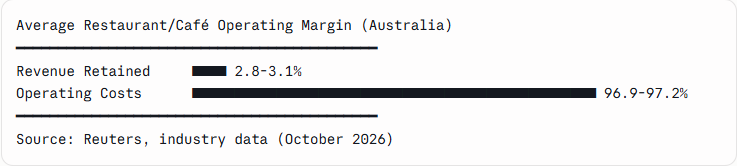
Source: HOC visualisation. Data from Reuters, 1 October 2026 citing Australian Restaurant and Cafe Association industry figures.
Which is why 1 October 2026 has turned out to be one of the most disruptive dates on the Australian small business calendar this year.
The RBA reckons the reforms will save consumers around $1.2 billion a year , roughly $60 per adult card user. But for small business owners, it’s a genuine rethink of pricing, cash flow and payment acceptance.
At Hughes O’Dea Corredig (HOC), we’ve been fielding calls from Melbourne business owners daily since the ban landed. Let’s walk through what’s changed and what you should do now.
The Quick Version
Here’s the short version if you just need the headlines.
- What changed: No separate surcharges on Visa, Mastercard, eftpos, American Express and other networks covered by their applicable no-surcharge rules.
- When: 1 October 2026. The ban is live right now.
- Who’s affected: Businesses accepting payments through the affected networks, subject to applicable exceptions.
- Who was surcharging: Around 16% of businesses, per the RBA.
- Who enforces: Card networks and payment providers enforce their no-surcharge rules through merchant agreements. The ACCC enforces relevant Australian Consumer Law requirements, including misleading pricing.
- Next milestone: 30 October 2026 , detailed fee data published publicly.
- Then: 1 April 2027 , foreign card interchange caps and clearer merchant statements.
Who Was Surcharging Before 1 October 2026
Australian Businesses & Surcharging (RBA Data)
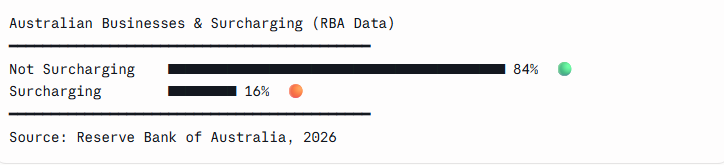
Chart: HOC visualisation. Data from the Reserve Bank of Australia , Review of Merchant Card Payment Costs and Surcharging, 2026.
The thing to grasp? It’s not just a payment issue. It’s a pricing, margin, cash flow and systems issue all rolled into one.
Why Melbourne Small Business Owners Are Under Pressure
Let’s be honest , the ban hit at a time when Melbourne small businesses were already stretched thin. Rising rent, wage growth, energy costs, insurance premiums, the COVID Debt Levy.
Here’s what we’ve been hearing in Essendon and across Melbourne the past week.
“I was passing on 1.5% in surcharges , do I absorb it or raise prices?” The core question most owners are wrestling with. The answer depends on margins, competition and customer price sensitivity.
“My booking system still auto-applies a surcharge , can I get fined?” Continuing to apply a prohibited card surcharge can breach payment network rules. Businesses should urgently review terminals, POS systems, invoicing software, websites and online payment platforms. Misleading pricing practices may also breach Australian Consumer Law.
“If 85% of small businesses never surcharged, why does this matter?” Because the 15% who did were often the ones with the thinnest margins , hospitality, cafés, trades, personal services.
“My margins are razor thin , how do I actually make this work?” Honestly, this is where small business advisory services earn their keep. Model your real exposure, decide what you absorb versus pass on, plan it properly.
So What Actually Is the Surcharge Ban?
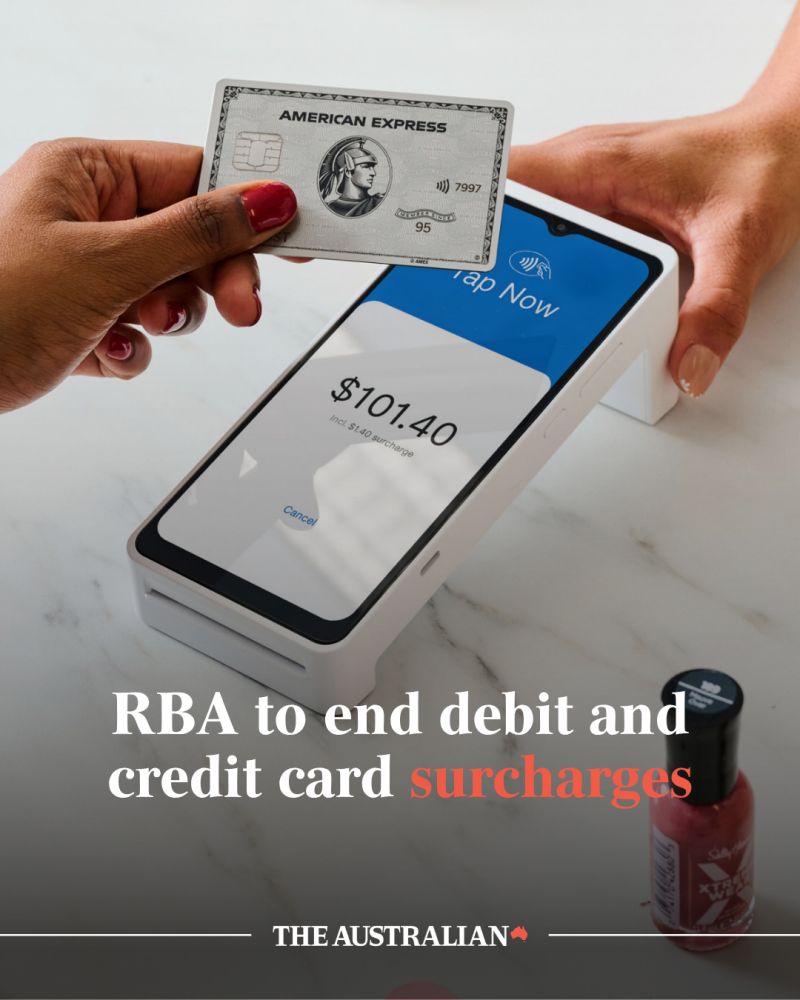
For about 20 years, Australian businesses have been able to add a surcharge to card payments , passing processing costs onto customers. From October, that system is gone.
The RBA’s July 2025 payments reform found surcharges weren’t actually driving better payment choices , people just paid them.
The reform package has three parts.
1. The surcharge ban itself , No separate card-payment surcharges on Visa, Mastercard, eftpos, American Express or UnionPay under their applicable no-surcharge rules from 1 October 2026. PayPal introduced its corresponding rule from 5 October 2026.
2. Interchange fee cuts , The RBA lowered domestic interchange fee caps from 1 October 2026. The changes are intended to reduce merchant payment costs, although actual savings depend on the pricing arrangements of payment service providers.
3. New fee transparency , From 30 October 2026, networks and large acquirers must publish fee data publicly, with detailed merchant statements from 1 April 2027.
Reform Package Timeline
2026-27 Payments Reform Rollout
━━━━━━━━━━━━━━━━━━━━━━━━━━━━━━━━━━━━━━━━━
Jul 2025 │ ● RBA publishes reform proposals
Oct 2026 │ ● Surcharge ban + domestic interchange cuts
30 Oct 26 │ ● Payment fee data publication
30 Jan 27 │ ● Interchange savings pass-through reporting
01 Apr 27 │ ● Foreign card caps + detailed statements
━━━━━━━━━━━━━━━━━━━━━━━━━━━━━━━━━━━━━━━━━━
Chart: HOC visualisation. Timeline compiled from the Reserve Bank of Australia reform announcements and Australian Banking Association surcharging reform hub.
Think of it as a trade-off. You generally can’t surcharge affected card payments anymore. The reforms are intended to reduce processing costs and provide better fee transparency, but actual savings depend on your payment provider and merchant service agreement.
Why This Matters More Than You Might Think
The surcharge ban is being called the biggest shake-up to Australia’s payments system in two decades. Here’s the plain truth of why it matters.
The margin squeeze is real. For a hospitality business on 2.8-3.1% margins, absorbing a 1-2% card fee without raising prices can wipe out a third or more of your profit.
Enforcement is active, not passive. Card networks and payment service providers enforce their no-surcharge rules through merchant agreements. The ACCC continues to oversee consumer-law requirements, including misleading pricing. Businesses should promptly address any prohibited automatic card surcharges.
Interchange cuts aren’t automatic. The RBA has lowered the caps, but your acquirer still has to pass savings through to you.
Bank Revenue Impact , Macquarie Analyst Estimate
Australian Bank Revenue Impact from Interchange Cuts (2027)
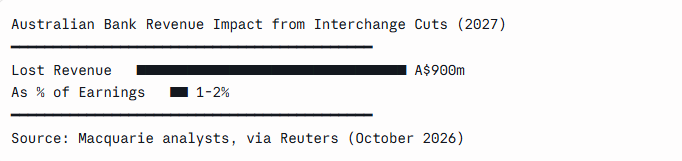
Chart: HOC visualisation. Data from Macquarie analyst estimates, reported via Reuters, 1 October 2026.
For anyone running a Melbourne small business, this is a “take-stock” moment. A proper review with a business advisor Melbourne can genuinely change how you handle the transition.
How the New Rules Actually Work
Let’s walk through what the ban means in practice.
Step 1: Check what you were surcharging on. Pull the last three months of merchant statements. The gap between surcharge revenue and merchant service fees is roughly your going-forward exposure.
Step 2: Audit all your systems. POS terminals, booking engines, online payment platforms, invoicing, recurring payments. Any auto-applied surcharge is now a compliance risk.
Step 3: Decide how to recover the cost. You’ve got three options.
- Absorb it: Take the margin hit. Works if your margins are healthy.
- Lift prices: Build card cost into base prices. What most hospitality is doing.
- Encourage lower-cost payment methods: Push bank transfers, PayID, BPAY where appropriate.
Step 4: Update customer-facing material. Menus, signage, booking confirmations, invoices, websites. The Ombudsman has flagged this one directly.
Step 5: Review your merchant service provider. With new transparency from 30 October, it’s prime time to renegotiate or switch.
A Real-World Example , A Melbourne Café on $800k Revenue
Annual Impact of the Surcharge Ban (Hypothetical Café)
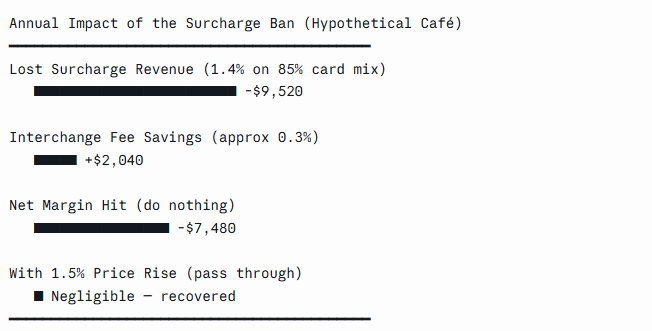
Chart: HOC worked example for illustration purposes only. Assumptions based on average Reserve Bank of Australia merchant service fee data and typical hospitality card payment mix. Actual results will vary by business.
Want your actual numbers run? A cash flow forecasting session with our team is honestly the fastest way to find out where you really sit.
Your Post-October 2026 Checklist
Bookmark this. Here’s what we’re walking Melbourne clients through right now.
- Confirm no surcharges are being applied anywhere , terminals, invoicing, booking, recurring payments.
- Review your September 2026 merchant statements , this is your baseline.
- Request a current fees breakdown from your acquirer , ask about interchange, scheme fees, and acquirer margin.
- Compare quotes from alternative providers , use the new 30 October benchmarks.
- Model your pricing response , flat rise, selective, or loyalty for cash/transfer customers.
- Update all customer-facing material , audit menus, websites, receipts, invoices.
- Train your team , scripted responses for customer questions.
- Rebuild your 12-month cash flow forecast , better to know now than May.
- Consider least-cost routing , meaningful savings for debit-heavy businesses.
- Get proper advice , a session with a business tax accountant can save you more than it costs.
Common Myths Doing the Rounds
Plenty of misunderstandings have surfaced in the first fortnight. Let’s clear up the big ones.
Myth 1: “The ban doesn’t apply to Amex.” Wrong. Amex confirmed its no-surcharge rules alongside the main networks.
Myth 2: “Rename it a ‘processing fee’ and I’m fine.” Absolutely not. The ban applies regardless of what you call it.
Myth 3: “Interchange cuts flow to me automatically.” Not automatically. You may need to actively renegotiate with your acquirer.
Myth 4: “This mostly hits big businesses.” Backwards. The RBA says small businesses benefit most from interchange cuts , but those who were surcharging also feel the biggest pinch.
Myth 5: “Raising prices by 1% covers it for everyone.” For many, yes. For some, no. Depends on your card mix, current margin and competitive position.
Myth 6: “Surcharging might come back.” Highly unlikely. The direction is set, backed by regulatory pressure.
When to Take Action
Honestly? Yesterday. But if not, this week.
Act now if:
- You were surcharging before 1 October and haven’t fully adjusted.
- Your systems might still auto-apply surcharges.
- You haven’t reviewed merchant service fees in the last 12 months.
- You run hospitality, retail, trades, or personal services.
- Your margins are under 10% and card payments make up over half your revenue.
Treat it as urgent if:
- You’ve had an ACCC or card network query about surcharging.
- Your provider hasn’t communicated what’s changing.
- You’re not sure your POS or booking system is compliant.
- Your margins were already stressed before this change.
Book a conversation with a small business accountant Melbourne who understands this reform properly.
How HOC Helps Melbourne Small Businesses Navigate the Ban
This is where Hughes O’Dea Corredig comes in. We’re an Essendon-based Melbourne firm, and the surcharge ban has been one of the most-discussed topics in our client meetings over the past few weeks.
We’re not the kind of firm that processes BAS and moves on. We’re the kind that actually looks at your pricing, your margins, your cash flow, your systems , then helps you protect your business through a change like this.
Business Advisory
Our business advisory practice models the real financial impact, reviews merchant service agreements, runs pricing scenarios and builds cash flow forecasts that reflect the new reality.
If you want proper small business advisory services right now, this is where to start.
Tax Planning and Compliance
Our tax planning team handles the tax side of any pricing changes , GST on new pricing, PAYG instalment adjustments, BAS obligations. We’re BAS agent Melbourne ready as well.
Private Wealth and Financial Planning
For owners whose personal finances are tied to the business, HOC Private Wealth looks at what margin changes mean for drawings, super contributions and personal cash flow.
Whether you’re a café in Moonee Ponds, a retailer in Essendon, or a service business working remotely across Melbourne , our team delivers practical business advisor Melbourne support that reflects today’s environment.
FAQs , Card Surcharge Changes Answered
When does the surcharge ban start?
It took effect on 1 October 2026. It applies right now across Australia.
Can businesses still charge a card surcharge?
Not on Visa, Mastercard, eftpos or Amex , the four major networks have all introduced no-surcharge rules under the RBA’s reform package.
Does the surcharge ban apply to Amex?
Yes. American Express confirmed in 2026 that it would introduce no-surcharge rules alongside the main networks, effective 1 October 2026.
How can an accountant help with the surcharge ban?
A business advisory accountant can model your real card cost exposure, review merchant fees, help plan pricing, update cash flow forecasts, and audit your systems for compliance.
How much does a business advisor cost?
The cost depends on the scope of advice, business complexity and services required. A one-off financial review may be priced differently from ongoing monthly or quarterly advisory support. Contact HOC’s Melbourne business advisory team for a quote based on your business needs.
What does a business advisory accountant do?
Cash flow forecasting, pricing analysis, margin reviews, systems advice, strategic planning, succession guidance. More than just tax returns.
What should small businesses do about the surcharge ban?
Audit your systems, review your merchant agreement, decide how to recover the card cost, update customer-facing material, and model your new cash flow.
Will my merchant service fees actually drop?
They should, but your acquirer has to pass through the interchange cuts. Many businesses will need to renegotiate.
Is the ban being enforced?
Yes. The ACCC is enforcing, and card networks police compliance through merchant agreements. Penalties can be meaningful.
Why Our Advice Holds Up
The ban’s technical rules are clear enough. But the practical business impact depends entirely on your margins, customers, systems and pricing strategy.
Here’s why Melbourne small businesses keep coming back to Hughes O’Dea Corredig.
- Decades of experience with Melbourne small business regulatory change, pricing shifts and cash flow challenges.
- Registered Tax Agents and qualified advisors with current knowledge of RBA payments reform and ACCC enforcement.
- Integrated team , tax, business advisory, SMSF, financial planning, succession, estate planning , all under one roof.
- Practical, no-jargon approach. We tell you what the numbers mean for your business.
- Active tracking of RBA guidance, ABA updates, ACCC compliance guidance, CPA Australia and CA ANZ.
Reviewed by the HOC Business Advisory and Tax Team, October 2026. This article provides general information and does not replace professional advice tailored to your business circumstances.
Your Next Step , Book a Business Review
If you run a Melbourne small business affected by the ban, the most useful thing you can do in the next few weeks is sit down with someone who can model the impact and plan a response.
Book your small business review
Our team runs confidential small business review sessions where we look at your margins, review merchant fees, model pricing scenarios and put together a clear plan to protect your business.
Call HOC on +61 3 9375 4286 or email mail@hoc.com.au to lock in a time.
Or have a look around first
Not quite ready to book? Browse our business advisory services, tax planning, and HOC Private Wealth.
Related Resources
- Key things for investors to keep in mind during times of market turmoil
- Investing Strategies for Financial Freedom: Leveraging Melbourne’s Elite Financial Planning Services
- [SMSF Assets series] ATO recommends licensed financial advisory to SMSF trustees investing in Crypto Assets
- Mastering Cash Flow Management: 9 Proven Moves for Melbourne Small Business
- Where does all my money go? Save money on your three biggest expenses
- ATO recommends licensed financial advisory to SMSF
- ATO Tax Changes 2026: What Small Business Owners Need to Know
- Master Your Money: Open Banking Australia & Real-Time Cash Flow
- AI-Driven Accounting in 2026: How Businesses Are Redefining Financial Services
- Tax Time Preparation : Everything You Need to Know Before EOFY 2026
- How to grow your superannuation in 2026: Essential Strategies for Australian Workers!!!
- 2026–27 Federal Budget: What It Means for Australian Small Business Owners
- ATO Debt in 2026: Director Penalty Notice Risks for Business Owners
- Tax Return 2026: TPAR Pre-Fill Checklist for Contractors
- Dynamic PAYG Instalments: What Australian Small Businesses Need to Know Before 2027: https://www.hoc.com.au/dynamic-payg-instalments-what-australian-small-businesses-need-to-know-before-2027/
- Victorian Land Tax Changes for 2027: What Melbourne Property Owners Need to Know : https://www.hoc.com.au/victorian-land-tax-changes-for-2027-what-melbourne-property-owners-need-to-know/
Wrapping Up
The card surcharge changes October 2026 are the biggest shake-up to Australia’s payments system in two decades.
For some Melbourne small businesses , especially hospitality on 3% margins , the hit is material. For others, the interchange cuts actually leave them better off than before.
The businesses that come through this well sit down early, model the numbers, update their systems and make smart pricing decisions. The ones who struggle usually assume it’ll sort itself out, or wait until their first quarterly BAS to realise the hole in their cash flow.
Don’t be in that second group.
Book your small business review with Hughes O’Dea Corredig and walk through the surcharge ban era with a proper plan , not a nervous feeling every time you look at your merchant statement.
Hughes O’Dea Corredig is a Melbourne accounting firm specialising in tax planning, business advisory, SMSF, financial planning, succession, and estate planning. Based in Essendon, we look after Melbourne small businesses, families, and business owners , plus clients across Australia via secure remote service. Information in this article is general in nature and current as of 13 October 2026. Please get personalised advice before making any pricing, systems, or payment strategy changes.
About Hughes O’Dea Corredig
Hughes O’Dea Corredig is a Melbourne-based accounting and wealth management firm with over three decades of experience helping individuals and businesses achieve financial freedom.
Our Core Services:
Wealth Management • Tax Advisory • Superannuation • SMSF Management • Business Accounting • Business Adviosry , Retirement Planning etc.
🌐 www.hoc.com.au | 📍 Level 2, 333 Keilor Road, Essendon VIC 3040 | 📧 mail@hoc.com.au
Connect with Us
Follow our latest insights and expert opinions:
🔗 LinkedIn 📘 Facebook

Categorised in: Uncategorized